
- Why Most Advertisers Burn Cash and How to Stop Doing It Today
- How to Qualify Leads Before You Waste Budget or Time
- How Meta Ads Machine Learning Works (And What Andromeda Changed)
- Why Post IDs Are Your Secret Sauce (Most Advertisers Miss This)
- How to Make Your Meta Ads Funnel Work
- Got Questions About Meta Ads?
- Meta Ads Terms That Make You Sound Smart
- Ready To Scale Your Meta Ads Funnel?
I can trace every big win I’ve had in marketing back to a sweaty carnival tent, a stack of hot tub brochures, and one lesson I didn’t see coming.
Long before I was helping six-figure businesses scale toward seven figures or managing ad budgets in the millions, I spent one unforgettable college summer selling hot tubs at carnivals.
Yes, that was a real job. And yes, it was as chaotic as you’d imagine.
I was the sweaty guy in the hot tent, shouting over demolition derbies and heckling clowns at the dunk tank, waving down funnel cake eaters and balloon-chasing families. Anyone who looked my way got a sunburned sermon on backyard hydrotherapy.
Stress relief. Muscle recovery. Family time. More jets. Quiet heating. Ergonomic seating.
All of it pitched against the sugar-rush backdrop of the midway, as I tried to convince moms and dads wrestling overstimulated toddlers with melting ice cream running down their arms that today was the perfect day to buy a ten-thousand-dollar hot tub.
It never was.
I dumped features because I didn’t know better. I mistook activity for progress because people smiled, nodded, and walked away with a flyer.
And that’s exactly how most businesses run their ads. Shouting into the noise, chasing the wrong people, and wondering why nobody’s buying.
Why You’re Burning Cash and How to Stop Doing It Today
This was years before the internet was a thing. I didn’t know pixels, algorithms, or event tracking. I only knew what it felt like to pitch the wrong people for hours.
At the carnival, I thought I was winning. Every smile, every nod, every brochure taken felt like progress. But none of it paid the bills.

That’s exactly what vanity metrics look like in ads. Likes, views, and shares that look like progress but are really just polite interest dressed up as success.
Less experienced (and even some very experienced) ad agencies use vanity metrics to impress clients who don’t know any better. They can be useful as indicators, but if they’re all you focus on, you won’t make payroll.
Attention isn’t the same as intention. If your funnel’s full of cold traffic that’ll never buy, your results will stay stuck.
How to Qualify Leads Before You Waste Budget or Time
One afternoon, a veteran sales rep named John pulled me aside.
He was the kind of old-timer who’d sold everything worth selling, from life insurance door to door to pots and pans in cramped kitchens. He leaned in, stale coffee on his breath, skin weathered, voice worn to gravel.
“Hey kid. You’re talking to everybody like they’re gonna buy. They’re not. Some don’t want what you’ve got. Some can’t afford it. And some are happy to waste your time just to watch you work. Find the ones who matter, and don’t let them walk away.”

He was right. Some people just wanted shade, a free bottle of water, or a place to rest. Others lit up at the mention of jets or the tankless water heater. Those were the ones worth my time.
Whether I’m selling hot tubs at a carnival or running a Meta funnel for a client, the rule’s the same. Qualify early.
Online, that means using your copy, creative, and funnel steps to filter out the wrong audience before you spend another dollar reaching them. When someone’s interested, slow down and ask the questions that reveal timing, budget, and fit.
How Meta Ads Machine Learning Works (And What Andromeda Changed)
Back at the booth, I had no way of knowing who was ready to buy. I threw my pitch at anyone within earshot and hoped for the best.
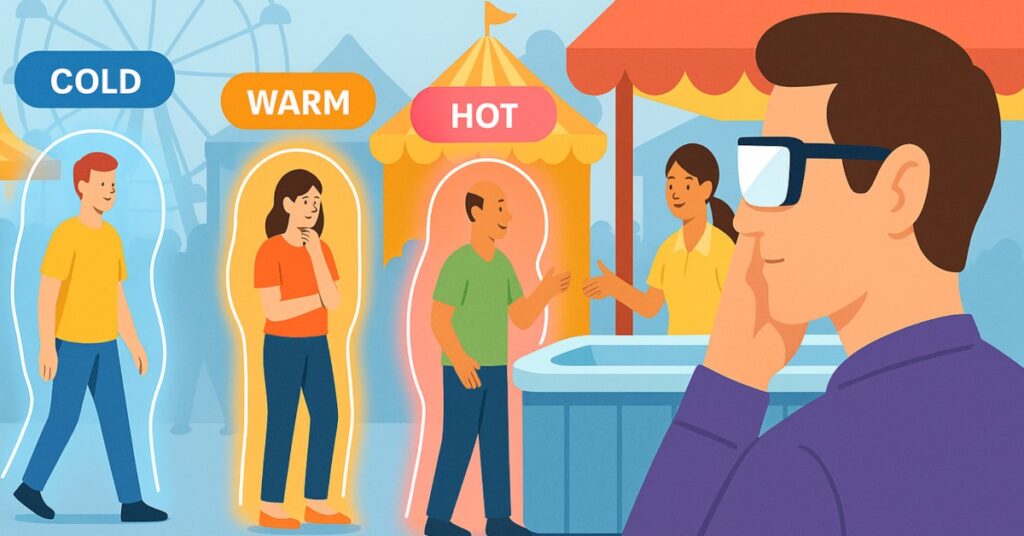
Now imagine a pair of magic marketing glasses that made in-market buyers glow like neon. That’s what a clean measurement setup gives you.
With a working pixel, server-side events, and first-party data, Meta can put your ads in front of people already in-market. The system sees who pauses, clicks, watches, visits your site, and explores your offer. It learns, and your delivery sharpens.
Meta Isn’t Trying To Waste Your Money
Meta wants people to have a good experience on the platform. When your content connects, it rewards you with more reach, lower costs, and better delivery.
This got even stronger with the Andromeda update. Meta’s delivery system got smarter. Much better at figuring out which ads to show to which people.
You used to have to spell everything out. Interests, job titles, age ranges. Now the machine learning leans on your creative first. Your videos, your images, your copy. That’s what tells Meta who your leads and buyers are.
And it goes deeper than that. Say you respond to the color blue and your best friend responds to the color red. You wouldn’t know that. Meta does. It adjusts the ad accordingly, matching different combinations to the people most likely to care.
That’s why variety matters.
Andromeda can handle a lot of concepts in a single ad set. Some people push that to the limit. With enough budget and strong messaging, that can work. But if your budget’s tight, loading up a bunch of untested creative usually means most of it never gets enough delivery to prove anything.
So start organic. Post first. Let your audience tell you what hits. When something gets a little traction, that’s when you put money behind it.
The 3:2:2 Method For Testing Creative
Once a concept works organically, test variations of the winner using the 3:2:2 method inside a flexible ad or dynamic creative ad set.
- Three creative variations
- Two primary texts
- Two headlines
Then split ad sets by format. Videos in one. Still images in another. That makes it clear which Post IDs are actually winning and why.
Credit where it’s due. I learned the 3:2:2 method from Charley Tichenor’s Disrupter Academy. Full disclosure, I promote his training as an affiliate. And for good reason. It’s been a core part of how I run Meta and Instagram ads ever since.
Why Post IDs Are Your Secret Sauce (Most Advertisers Miss This)
At the carnival, every pitch started from zero. No memory. No momentum. Even if someone liked what I said, that energy had nowhere to go.
Meta works differently.
Every ad in someone’s feed is a post. And every post gives people a way to spread word of mouth through comments, likes, and shares. Each one has a unique Post ID. Think of it like a mini landing page with built-in memory. Every engagement is tied to that ID.
Reuse the Post ID and you keep that momentum.
The social proof stays. The machine learning gets smarter. And under Andromeda, a Post ID with strong engagement history sends a clear signal. Your ad resonates. So Meta shows it to more of the right people for less money.
Lower CPMs. More reach. Better ROAS.
Reusing Post IDs isn’t laziness. It’s compounding.
How to Make Your Meta Ads Funnel Work
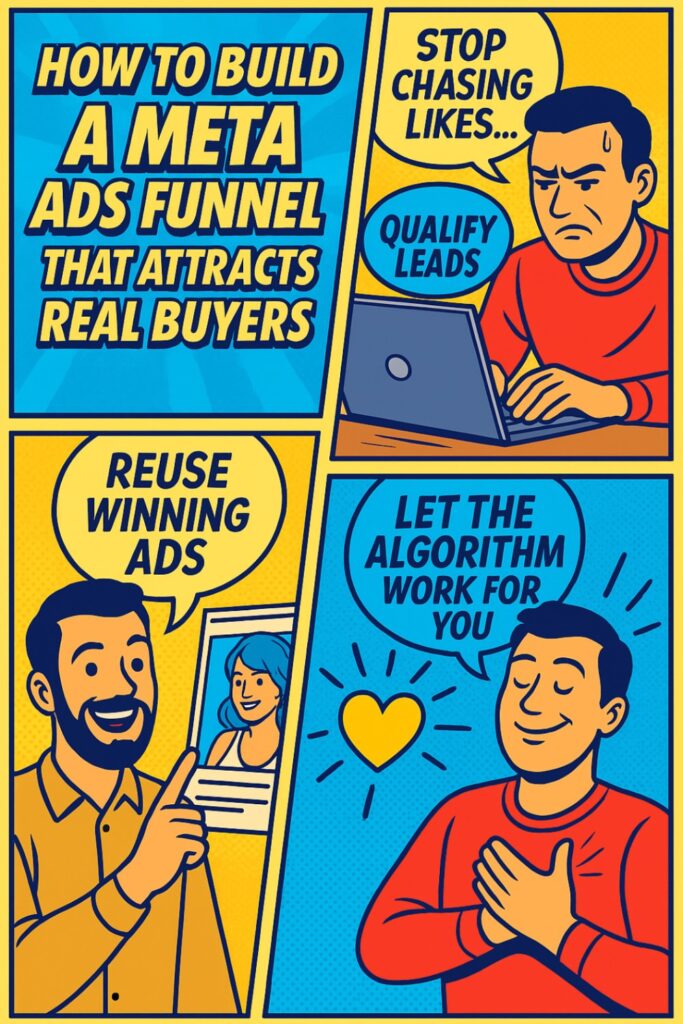
A working Meta funnel isn’t about shouting louder or chasing cheap clicks. It’s about knowing where your buyer is in the journey and showing up with the right message at the right time.
Nobody becomes the top hot tub salesman at a small-town county fair by talking to everyone.
(And yes, I don’t mean to brag, but I really did sell the most hot tubs that summer at the Sullivan County Fair in Forksville, Pennsylvania.)
I won by finding the people who were ready to buy and keeping their attention until they bought. Meta works the same way. When someone shows interest, the algorithm brings your message back at just the right moments until they’re ready to say yes.
That’s when selling stops feeling like chasing and starts feeling like winning.
Meta Ads Terms That Make You Sound Smart
Here are the terms you’ll hear tossed around in Facebook and Instagram advertising. Whether you live in Ads Manager or you’re just getting started, these will help your campaigns work better.
- Andromeda: Meta’s AI-powered ad retrieval engine, rolled out in late 2024. Instead of relying on manual audience settings, Andromeda uses your creative as its strongest targeting signal and matches each ad to the users most likely to respond. Think of it as the upgrade that turned my carnival guesswork into a system that actually knows who’s ready to buy.
- Cold Traffic: People who’ve never heard of your business. In my hot tub days, this was the crowd walking past my tent without slowing down or making eye contact.
- Warm Traffic: People who’ve engaged with your ads, visited your website, or joined your email list but haven’t bought yet. At the fair, these were the folks who stopped to ask how many jets the hot tub had, then wandered off for a funnel cake.
- Hot Traffic: People ready to buy now. At the booth, these were the ones who walked up, pointed at a hot tub, and said “I’ll take it.”
- Pixel (Meta Pixel / Facebook Pixel): A small tracking code on your website that records visitor actions like page views, sign-ups, and purchases. It helps Meta find more people similar to your best customers. Think of it as the notebook I kept to track who stopped by and what they liked, then shared with my sales manager so he could watch for my prospects.
- Server-Side Events (Facebook CAPI): A tracking method that sends data directly from your server to Meta’s Conversions API, keeping reporting accurate even when browser tracking gets blocked. It’s like keeping a backup ledger in case my prospect notebook got ruined by a fried Oreo cookie. (Yes, fried Oreo cookies are a thing.)
- First-Party Data: Data collected directly from your audience. Email addresses, purchase history, survey responses. Under Andromeda, clean first-party data is even more critical because it trains the algorithm to find better buyers faster. At the fair, this would be the contact details of people who already bought or wanted more information.
- Post ID: A unique code assigned to every ad post on Facebook or Instagram that stores its engagement history. Reusing a Post ID with strong social proof helps lower costs and improve delivery. It’s like having the same enthusiastic crowd under the tent, cheering every time I went into a pitch.
- Social Proof: Evidence that others like, trust, and recommend your offer, shown through likes, comments, shares, and saves on your ads. At the fair, a crowd gathered around my pitch made other people stop to see what was going on.
- CPM (Cost Per Mille): The cost per 1,000 ad impressions. Lower CPMs mean more reach for less money. Under Andromeda, diverse creative and strong engagement are the fastest ways to bring them down. It’s like negotiating for a better spot at the fair to get in front of more foot traffic.
- ROAS (Return on Ad Spend): How much revenue your ads generate compared to what you spent. A 5x ROAS means $5 earned for every $1 spent. In fair terms, if I dropped $100 on booth space and sold $500 in hot tubs, I was doing well.
- Creative Diversity: Producing ad variations with different hooks, visuals, formats, and angles. Andromeda rewards variety and penalizes repetition. If all your ads look and sound the same, the algorithm has fewer signals to work with and your costs go up.
- 3:2:2 Method: A creative testing structure I learned from Charley Tichenor’s Disrupter Academy. Three creative variations, two primary text options, and two headlines per ad set. Pair it with format-separated ad sets (videos in one, still images in another) so you can see which Post IDs are winners before graduating them to a sales campaign.
Got Questions About Meta Ads?
If your Facebook or Instagram ads feel like they’re working hard but your bank account says otherwise, you’re not alone. These are the questions that actually matter when you’re trying to turn clicks into customers.
How does the Meta ads algorithm work?
Meta’s algorithm is a smart matchmaker for your business. With the Andromeda update, your ad creative is now the strongest targeting signal. The system analyzes your creative, then serves ads to the people most likely to take action. Every click, view, and visit teaches it more about your real buyers, so delivery sharpens over time.
Why are my Facebook ads not converting?
If your ads get clicks but no sales, you might be targeting the wrong audience, sending people to a weak landing page, or measuring the wrong metrics. Under Andromeda, limited creative diversity can also tank performance. Start by qualifying leads in your copy and creative so only the right people click through.
What is a Post ID in Meta ads?
A Post ID is the unique code attached to every ad you run on Facebook or Instagram. It stores the engagement history from that post. Reusing a winning Post ID lets you keep that social proof so your ad keeps its momentum.
Why should I reuse Post IDs?
When you reuse a Post ID with strong engagement, you keep the social proof and the algorithm’s memory of success. That leads to cheaper impressions, better reach, and more conversions without increasing your budget.
What is social proof in Meta ads?
Social proof is the engagement that makes your ad look credible. The digital version of word of mouth. The more positive signals your ad collects, the more strangers trust it.
How can I qualify leads with my Meta ads?
Use your ad copy, creative, and targeting to filter out the wrong audience early. Speak directly to the problems and goals of your ideal customer so only qualified prospects click through.
How do I match my ad to the right funnel stage?
Cold audiences need curiosity and awareness. Warm leads need proof and clarity. Hot buyers need a strong offer and a reason to act now. Match your message to where the prospect is in the journey.
What metrics should I track for Meta ads?
Track leads, sales, and return on ad spend. Don’t obsess over vanity metrics. Focus on the numbers that move your business forward.
How long should I let my Meta ads run?
Give your ads enough time to gather roughly 50 optimization events. That usually takes five to seven days depending on your budget and volume. Under Andromeda, micromanaging too early can kill potential winners before the system has enough data to learn.
What is the Meta ads learning phase?
The learning phase is when Meta tests delivery to find the right audience. An ad set typically needs around 50 optimization events within seven days to exit the learning phase and stabilize. Clean data, stable budgets, and sufficient spend help the system get there faster.
Should I run engagement campaigns?
Engagement campaigns are a good testing ground. If a post gets strong traction, pull the Post ID and run it in a conversion campaign.
How do I lower my Meta ads costs?
Improve your ad quality. Better creative, stronger engagement, and diverse variations signal quality to Meta, which lowers your CPMs and cost per conversion. Andromeda rewards variety, so avoid running the same look and message across every ad.
Can I scale Meta ads without raising my budget?
Yes. Reuse winning Post IDs, diversify your creative, and let the algorithm learn. More efficiency means more results without extra spend.
What is the best way to test Meta ads?
Start with an organic post. If it gets traction, pull the Post ID and put a small budget behind it as a traffic campaign to a cold audience using the 3:2:2 structure. Separate your ad sets by format so videos and images each get their own space. Once a creative proves itself, move that same Post ID into a sales campaign. Keep testing and scaling in separate campaigns so proven winners don’t starve your new tests.
What is the 3:2:2 method for Meta ads?
Three creative variations, two primary text options, and two headlines per ad set. I learned it from Charley Tichenor’s Disrupter Academy. It gives the algorithm enough combinations to test without spreading a small budget too thin. Pair it with format-separated ad sets so you can clearly see which Post IDs are winning before moving them into a sales campaign.
Do Meta ads still work?
Yes. Meta ads work when you run them with a solid setup, clean data, strong creative, and the right audience. Andromeda has made the retrieval system smarter than ever at matching ads to buyers. The advertisers who struggle are the ones chasing clicks instead of conversions.
What is Meta’s Andromeda update?
Andromeda is Meta’s AI-powered ad delivery upgrade, rolled out in late 2024. It made Meta smarter at figuring out which ads to show to which people. The big change: your creative is now the strongest signal for who sees your ads. Instead of you picking interests and demographics, you feed the algorithm diverse creative and clean data, and it finds the buyers for you.
Ready To Scale Your Meta Ads Funnel?
If your Meta ads aren’t delivering, you’re not alone. These steps come straight from the same process that took me from shouting over demolition derbies to building ad strategies that actually convert.
By now you already know. Stop measuring likes and start measuring leads, sales, and revenue. And stop pitching everyone. Use your copy and creative to filter fast so only the right people click through.
Here’s where it gets practical.
Step One: Test Cheap, Then Scale With Post IDs
This is the process I use with every client, and it works whether your budget is modest or massive.
Start by posting new creative organically. If a post gets real traction (comments, shares, saves), pull its Post ID and put a small budget behind it as a traffic campaign aimed at a cold audience.
I know. A traffic campaign. It sounds wrong. But here’s why it works.
It’s far cheaper for Meta to find people who like to click than it is to find buyers. A traffic objective lets you train the algorithm on your creative at a fraction of the cost. Meanwhile, everyone who clicks through lands on your offer page, which means the pixel fires, the data flows back, and Meta starts building a picture of who’s actually interested.
Use the 3:2:2 setup for the traffic campaign. Videos in one ad set, still images in another. This is where you find your winners.
Once you have winners, take that same Post ID, with all its social proof and engagement history, and run it in a sales objective campaign. Now you’re running two objectives at the same time. The traffic campaign keeps feeding the machine new data at a low cost, and the sales campaign converts the people the system has already learned to find.
As more purchase data rolls in and the sales campaign gains momentum, taper down the traffic spend and let the sales campaign carry the weight. The Post ID keeps its full history the entire time. And as budgets grow, you can always test new variations of the winning creative (different hooks, angles, lengths) without risking the proven performer.
Keep your testing and scaling in separate campaigns. Under Andromeda, if you mix a proven Post ID with brand new test creative in the same ad set, the algorithm will feed the winner and starve the newcomers. Let new creative earn its way in a different campaign before it graduates.
And give the system time. An ad set needs around 50 optimization events within seven days to exit the learning phase. Stop resetting the learning phase and start letting Andromeda do its job. Keep your creative library fresh. The more you give the system to work with, the better it gets at finding your buyers.
Step Two: Match Your Message To The Funnel Stage
Cold traffic needs curiosity. Warm leads need proof and clarity. Hot buyers need a clear offer and a reason to act now.
Step Three: Get Help If You Need It
Selling hot tubs taught me that the easiest way to make a sale is to get in front of someone already in the market and ready to buy. Meta makes this possible at scale.
But if your Facebook and Instagram ads are getting clicks, views, and “nice ad” comments without turning into customers, you don’t have an ad problem. You have a funnel problem.
That’s where I come in. I help six-figure businesses scale toward seven figures by building Meta ad funnels that find the right buyers, keep their attention, and move them to the sale.
👉 Click here to see how we can work together
Stop guessing. Start selling.