
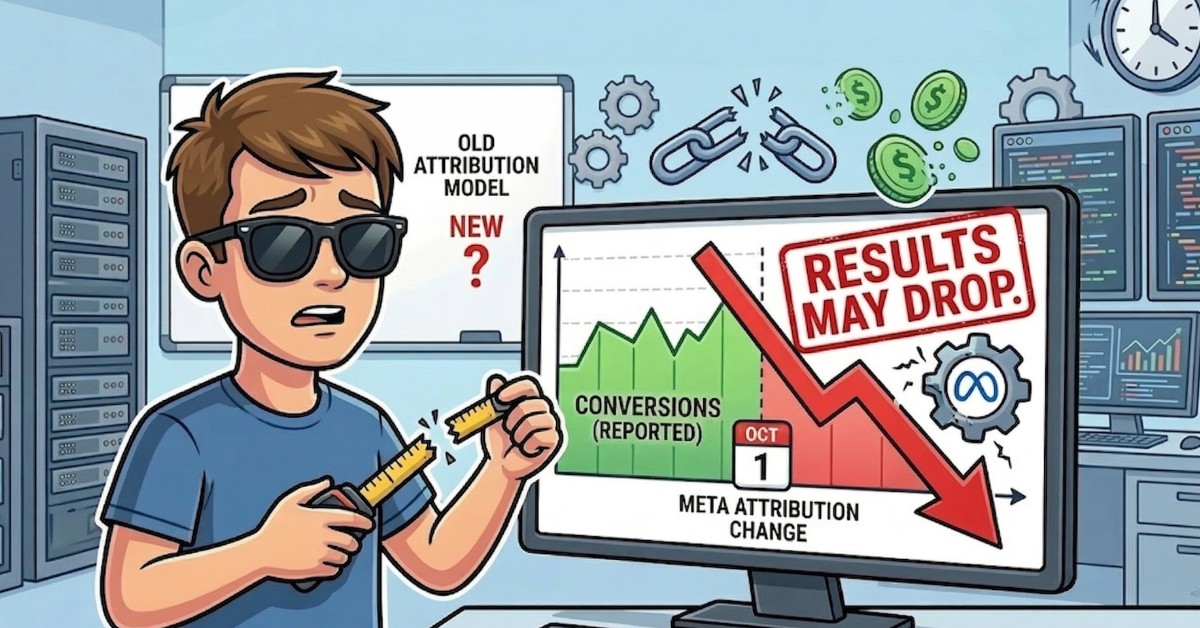
Meta is changing how it measures ad performance in March 2026. Most of your competition will miss what this actually means. Here’s what you need to know.
Meta Attribution Changes: What Your Ad Metrics Are About to Show
For years, Meta’s reported numbers have been higher than Google Analytics.
This wasn’t an error. It was how Meta counted clicks.
In March 2026, Meta is fixing this. Your reporting will change. And you need to understand why before you see lower numbers and panic.
The Root Cause: How Meta Used to Count Clicks
Here’s what nobody explained clearly.
Meta counted almost anything as a click:
- Someone liked your ad = click
- Someone commented = click
- Someone saved it = click
- Someone shared it = click
- Someone actually clicked the link = also a click
Google Analytics only counted actual link clicks. No engagement metrics mixed in.
So the gap between platforms wasn’t a mystery. Meta’s attribution model was just broader. That meant you were making decisions off numbers that didn’t match reality.
Where Most Agencies Get This Wrong
Many advertising agencies do something dangerous. They look at the platform’s numbers and call it measurement.
They check Meta Ads Manager. They look at ROAS. They optimize off what Meta tells them. And they think that’s attribution.
It’s not. It’s blind trust.
Platform attribution is incomplete by definition. Meta only sees what happens on Meta. Google only sees what happens in Google Analytics. Neither one sees the actual customer journey.
A customer might see your ad on Meta, leave, come back three days later from organic search, and buy. Meta takes credit. Google takes credit.
Your CRM sees ONE customer.
But both platforms claim they drove the sale.
If you’re basing decisions on platform attribution alone, you’re basing them on incomplete data. You can’t bet a business on that.
This is exactly why our team sets up measurement at a different level. Not just using what the platforms tell you, but understanding what they can’t see.
What’s Changing: The Three Key Shifts
1. Clicks Now Mean Actual Link Clicks
Starting March 2026, Meta will only count clicks that actually happened.
A click equals someone who clicked your ad, and landed on your site. From there, the visitor will either bounce, purchase, or become a lead… whatever you’re optimizing for.
Of course, if you were trying to attribute sales to likes, saves, comments, and shares… Well, those no longer count as clicks.
So your click through conversion numbers will drop.
The data underneath is cleaner. But if you were only looking at Ads Manager, this will feel like a bad day.
If you were measuring properly, it’ll feel like clarity.
2. Social Engagement Gets Tracked Separately
Engagement didn’t disappear. It just moved into its own category called “engage through attribution.”
Now you see two distinct attribution paths.
Click through means clicked your ad and bought.
Engage through means liked it, saved it, commented, shared it, then came back and bought.
Both are real. Y
ou just see them separately now.
And many agencies will get lost here because they’ll see two metrics and won’t know which one matters. Both matter, but for different reasons.
3. Meta and Google Analytics Will Align
The gap between Meta and Google Analytics will shrink significantly.
This means one source of truth instead of two conflicting stories. Easier to defend your data to stakeholders.
Real insight into what actually drives revenue. But alignment between two incomplete measurement systems is still incomplete. You still need to look beyond platform data to understand the real picture.
Why This Change Actually Matters
Meta is basically admitting they can only see part of the picture.
And they’re right.
They can only see what happens on their platform.
For years, marketers who understood measurement have known that platform attribution is a starting point, not the answer. This change just makes it more obvious.
The agencies that will struggle are the ones who built their entire optimization strategy around inflated platform numbers. (Also know as vanity metrics.)
When those numbers shift, they won’t know what to do.
The agencies that will thrive are the ones who’ve been measuring correctly all along.
Understanding customer journeys. Looking at incrementality. Using tools that see beyond single platform attribution.
Important Update for Video and Reels Campaigns
If you’re running video or Reels ads, pay attention to this change.
Meta changed how it measures “engaged views” for video ads.
Previously it meant 10 seconds of watch time. Now it means 5 seconds.
Why? Consumer behavior has shifted.
Meta data shows that 46% of online purchase conversions from Reels happen within the first 2 seconds of watching the video.
This shorter window gives you a more accurate picture of what’s actually working in your video campaigns.
How Your Metrics Will Shift
Be prepared for changes. They’re expected and normal.
Click through Conversions will decrease. You were counting engagement as clicks before. ROAS may look lower initially.
Cost Per Result may increase slightly. Engage through Conversions is new data you didn’t have before.
This is reclassification, not performance change.
Your ads didn’t stop working.
The measurement just got stricter.
If you were measuring properly, you already knew your real numbers. If you were only looking at platform data, this will be a shock.
Why This Actually Helps You
Cleaner data changes decisions. You’ve been optimizing off inflated numbers.
That led to scaling the wrong campaigns.
Killing winners because the data looked bad. Misunderstanding what drives actual revenue.
With accurate attribution you can see what actually converts.
Understand the real customer journey. Make smarter budget decisions.
Stop optimizing off noise.
What to Do Now
- Document your baseline now. Take screenshots of current ROAS, conversion rates, costs. You’ll want the before and after comparison. Compare Meta’s numbers to your actual business numbers. If they don’t match, you already know you’re missing something. Tell your team the numbers will shift. It’s not a failure. It’s a reclassification. But these new numbers are closer to reality, so they’re worth celebrating, not panicking over.
- When the change happens, don’t panic. Your campaigns keep running. The reporting changes. You don’t need to pause anything. Watch your dashboard. You’ll see the shift happen over a few days. This is normal. This is expected.
- After the change, let the data settle. Give your reporting time to adjust. The system will reconcile the new attribution model across all your campaigns. Compare trends, not absolutes. A shift in raw numbers is reclassification. Look at week over week and month over month trends instead. Compare platform data to your actual business outcomes. If they still don’t match, you know what to do next. Use both metrics. You now have click through AND engage through data. Both tell different stories about your customer journey. Use both.
The Measurement Lesson This Is Teaching
Platform data alone is incomplete.
Meta is basically admitting they can only see part of the picture. Most agencies will miss this lesson entirely.
They’ll see the new numbers, adjust their strategies, and keep looking only at platform data. That’s the safe move. It’s also the wrong move.
Real measurement goes beyond what any single platform tells you. Use incrementality testing. Look at your actual business outcomes.
Understand the customer journey across channels. Then use platform data as one input into that bigger picture.
That’s the difference between agencies that guess and agencies that know.
How to Actually Measure This: GTM, Analytics, and Looker
Meta’s new attribution is cleaner, but it’s still incomplete.
You need to see beyond what Meta reports.
Start with GTM
Set up custom events that track when someone lands on your site from Meta. Don’t rely on Meta’s click data. Create a GTM trigger that fires when utm_source=meta AND utm_medium=paid.
This gives you ground truth about what actually came from Meta, separate from what Meta claims.
Track the full journey in Google Analytics
Configure GA4 to see the complete customer path.
Someone clicks a Meta ad on day 1, leaves, comes back from organic search on day 5, and buys on day 7. GA4 shows you all three touchpoints.
Meta only claims credit for day 1. You need both perspectives.
Set up conversion paths reports so you can see which channels actually drove the sale, not which one got first click.
Build your dashboard in Looker Studio
Connect your GA4 data to Looker and create views that show what Meta reported versus what GA4 actually measured versus the gap between them.
This gap is where your real insight lives. If Meta reports 100 conversions but GA4 shows 60, you have a measurement problem.
If you’re optimizing based on Meta’s 100, you’re making decisions on 40% inflated data.
Use incrementality testing
Meta’s Conversion Lift tests answer the real question.
Did this ad actually cause the conversion or would it have happened anyway?
Platform attribution can’t answer that. Incrementality can.
This should be your north star, not the platform numbers.
Meta Attribution Questions
These are the questions we hear most often. If yours isn’t answered here, let’s talk.
What is Meta attribution change March 2026?
Meta is changing how it measures clicks and conversions. Clicks now only count when someone actually clicks your ad and lands on your site. Before, Meta counted likes, saves, comments, and shares as clicks too. This is why Meta’s reported numbers have been different than Google Analytics. Starting March 2026, Meta aligns with how Google counts performance.
Will my ROAS go down with Meta attribution changes?
Your reported ROAS may go down, but your actual performance isn’t changing. You’re no longer counting social engagement as clicks. This is reclassification, not a performance drop. Your business is performing the same. The measurement is just more honest.
Should I pause my Meta ads during the attribution change?
No. Don’t pause anything. This is a reporting change, not a performance change. Your campaigns keep running normally. The data just gets reclassified. Pausing campaigns will only hurt your performance and waste budget.
Will the video and Reels changes affect my campaigns?
If you run Reels ads, the change from 10 seconds to 5 seconds for engaged views is significant. It means Meta is measuring engagement on faster, shorter form content more accurately. This should help you understand video performance better. 46% of Reels conversions happen within the first 2 seconds, so this change reflects real behavior.
What’s the difference between click through and engage through conversions?
Click through means someone clicked your ad and bought. Engage through means someone liked, saved, commented, or shared your ad, then came back and bought. You now see both separately. Both are real. Both matter.
Will Meta and Google Analytics finally match?
Yes, significantly better alignment. Meta’s reported numbers have been higher because of how engagement was counted as clicks. Now that clicks only mean actual link clicks, the two platforms will report much more similar numbers.
Do I need to change my ad strategy after the attribution update?
Not immediately. Let the data stabilize first. After stabilization, we can look at the new data and optimize if needed. The core strategy doesn’t change. Just the measurement gets clearer.
Will the Meta attribution change affect iOS tracking differently?
No. This is a platform wide change that applies equally across iOS, Android, and desktop. The improved click attribution actually helps iOS tracking by improving accuracy across the board.
Why is Meta making this change?
To align with how Google and other platforms measure performance. Cleaner, more standardized metrics make platforms more trustworthy. That benefits you because you can finally trust your data and make better decisions.
What’s incrementality testing and should I use it?
Incrementality testing (like Meta’s Conversion Lift) measures whether an ad actually CAUSED a conversion or just took credit for it. Meta says this is the gold standard for measurement. This attribution change helps, but doesn’t replace incrementality testing if you want the most accurate answer.
The Bottom Line
Your reporting is getting more accurate. Your numbers will shift. That’s expected. Your business performance isn’t changing. You’re getting cleaner data to make better decisions.
The question is what are you going to do with it? If you’re measuring properly, this change clarifies what you already knew. If you’re not, it’s time to start.
Questions about how this affects your specific setup, or want to talk about measurement beyond platform data? Let’s connect.